Equipment available
| Product | Key points (manufacturer data) |
|---|---|
| Semi-automatic spreader, 20 ft | Rated lifting capacity 40 t. Engages the container by four twistlocks. The locks open and close by the tension of the wire-rope slings. Also has lifting lugs for containers with an uneven top surface. Own weight about 1.7 t. |
| Semi-automatic spreader, 40 ft | Same operating principle for 40 ft containers. |
| Lightweight spreader version | For smaller cranes with limited capacity reserve: about 1.2 t for 20 ft and about 1.5 t for 40 ft. |
| Load leveler | Installed between the crane hook and the load. Helps find the correct lifting point when the load is heavier on one side. Useful for unevenly loaded containers, generators, machinery and steel structures. |
Weights and capacities are taken from the manufacturer’s passports and materials and are confirmed in each commercial offer.
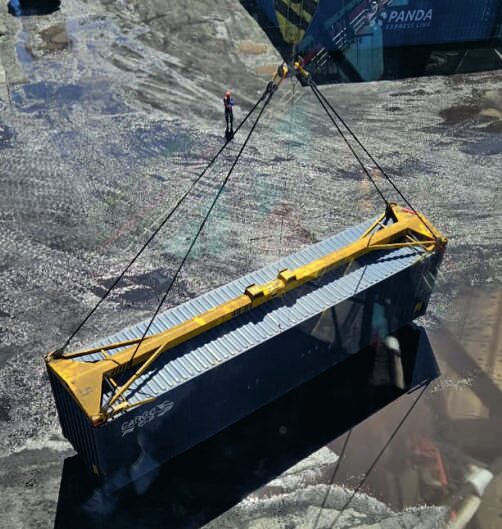
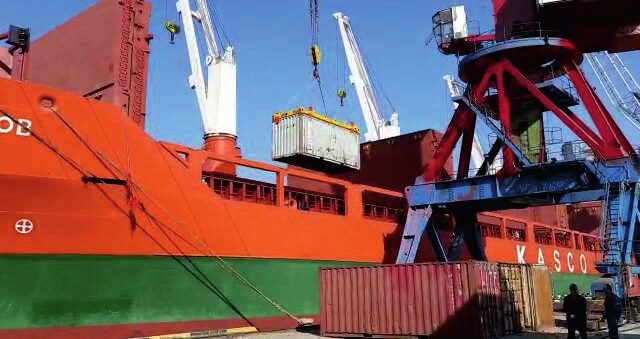
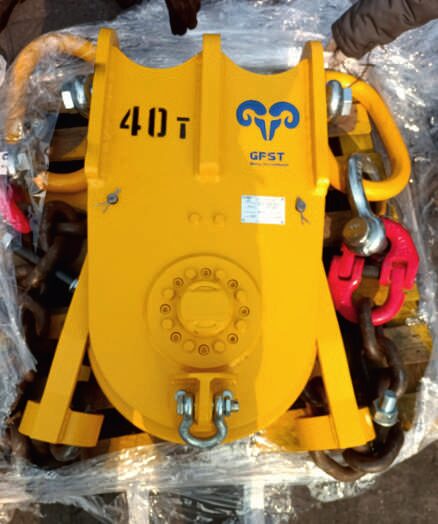
Photos from the manufacturer's product leaflets.
Model specifications from the passports
| Model | Container | Rated capacity | Own weight | EAEU certificate |
|---|---|---|---|---|
| Berkut semi-automatic spreader | 20 ft | 40.0 t | 1,740 kg without slings | EAEU N RU D-RU.PA05.V.00656/26, valid until 10 June 2031 |
| Albatross semi-automatic spreader | 40 ft | 40.0 t | 1,500 kg without slings, 1,860 kg with two 2SK slings. Dimensions 12,185 × 2,429 × 756 mm | EAEU N RU D-RU.PA01.V.67294/24, valid until 1 February 2029 |
| Load leveler GPST GZVR CU40 | Works with 20 ft and 40 ft semi-automatic spreaders | 40.0 t | 540 kg | EAEU N RU D-RU.RA02.V.74246/24 |
- Each spreader has four rotating twistlocks rated 10.0 t each, four lifting lugs for containers with an uneven top surface and three centering guides (flippers).
- The twistlocks of all four corners turn together when the wire-rope slings are tensioned and released, controlled by a control rope with a spring and a ratchet mechanism.
- The load leveler works with portal and mobile cranes with single or double hooks and needs no electrical power or hydraulic drive. The crane operator shifts the lifting point with a Ø32 mm chain so an unevenly loaded container is lifted level.
- Operating temperature for all three: −40 °C to +40 °C. Spreaders are made to GOST 23002-87 and comply with TR CU 010/2011.
Where this equipment makes sense
The strongest fit is not a large container terminal with dedicated equipment, but a site where containers or heavy loads are lifted by an ordinary crane:
- regional and multipurpose ports and private industrial wharves
- container depots and yards
- heavy-lift crane rental companies adding container work
- inter-island vessels with their own cranes
- shipyards, construction, mining, energy and agricultural companies that move containers or heavy equipment
Documents from the manufacturer
- product passports and operating manuals in English
- load test reports
- Eurasian Economic Union conformity certificates under technical regulation TR CU 010/2011 “On the Safety of Machinery and Equipment”
The equipment is made to Russian and Eurasian standards. Compliance with EN or ASME standards is not claimed. If your site requires it, this should be raised at the start.
Philippine side: safety inspection
In the Philippines, the Department of Labor and Employment (DOLE) carries out technical safety inspection of hoisting equipment and other mechanical equipment, and occupational safety and health standards apply to lifting operations. Before purchase, the buyer’s safety officer should confirm what documents and tests will be needed to accept the spreader or load leveler on site. Import duties depend on the HS / AHTN code and can be checked in the Philippine Tariff Finder.
Practical questions agreed before an order
- compatibility with your crane: hook, capacity reserve, sling length
- corrosion protection for humid, salty coastal conditions
- spare parts for the first year and who provides local service
- warranty, training of the local operator or partner, and payment route
A realistic first step is one pilot site with a clear task, rather than a large order.
Frequently asked questions
Which spreader models are available?
Berkut for 20-foot containers and Albatross for 40-foot containers, both semi-automatic with a rated capacity of 40.0 t, plus the GPST GZVR CU40 load leveler rated 40.0 t.
What is the operating temperature range?
From −40 °C to +40 °C, according to the passports.
Does the spreader need electric power or hydraulics?
No. The twistlocks open and close by the tension of the wire-rope slings, so the spreader hangs on the hook of an ordinary mobile, port or ship crane.
What is the lifting capacity?
The 20 ft semi-automatic spreader is rated at 40 t and weighs about 1.7 t. Lightweight versions weigh about 1.2 t (20 ft) and 1.5 t (40 ft).
Which documents come with the equipment?
Product passports and operating manuals in English, load test reports and EAEU conformity under TR CU 010/2011.
What is needed on the Philippine side?
DOLE carries out technical safety inspection of hoisting equipment. The buyer's safety officer confirms the documents and tests needed before purchase.
Official sources
Regulatory information on this page is a general orientation, not legal advice. Requirements change, so the importer should confirm them with the relevant authority or a licensed customs broker before shipment.
- DOLE Bureau of Working Conditions, Technical Safety Inspection
- DOLE, Occupational Safety and Health Standards
- Tariff Commission, Philippine Tariff Finder